PTA 2450 2460 - Neurological Disorders
This class covered many neurological disorders that PTAs may treat. It was difficult to really understand the affects these disorders have on patients, so it was a great experience to have guests come and talk to us and allow us to see their abilities and difficulties first hand.
One of the most memorable things about this class was having two guests, each with a different spinal cord injury, come and talk to us. Spinal cord injury was the hardest diagnosis for me to understand because each case is different. It was also hard for me to picture how someone who is unable to use certain muscles could complete different functional activities. Through watching and listening to the guests I was able to see that specific muscle no longer worked, and how they were able to use others to move. It helped me to really understand how important independence is, and that compensation strategies are very necessary to allow some patients the ability to function in this world. It was also interesting to see the emotional aspects that each of them exhibited. The man who had much more involvement from his injury, but had been dealing with it for 20 years had such a positive and motivated attitude. He had figured out what works the best for him, and had moved on with living his life. The other man that had less involvement, but his accident was only 11 months ago, was still trying to accept that his function would never be the same. It was a little hard to see, but it really showed me the importance of not taking a patient's hope away. They are both such amazing people, it takes a lot of hard work for them to do things that the rest of us take for granted as being easy. It's good to know that physical therapy can assist people in these situations to live a productive life.
We also had a young man with Cerebral Palsy come to visit us. We had the opportunity to meet him last semester and listen to his story, so it was great to see him again. He came in this time hoping that we could help stretch him out. It was good to work on stretching with him because his body reacts differently than other's that I have worked with. His tone and spasticity make it different, and we had to change some of the techniques we were used to doing so that it worked better for him. I really liked being able to have some hands on experience, because it's hard to really understand these kinds of things from reading text books or listening to lectures.
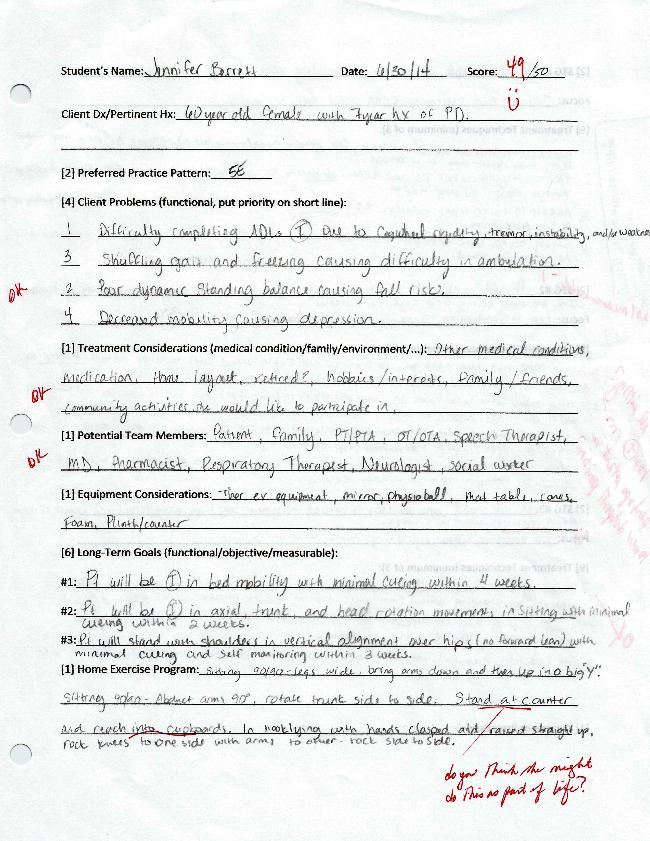
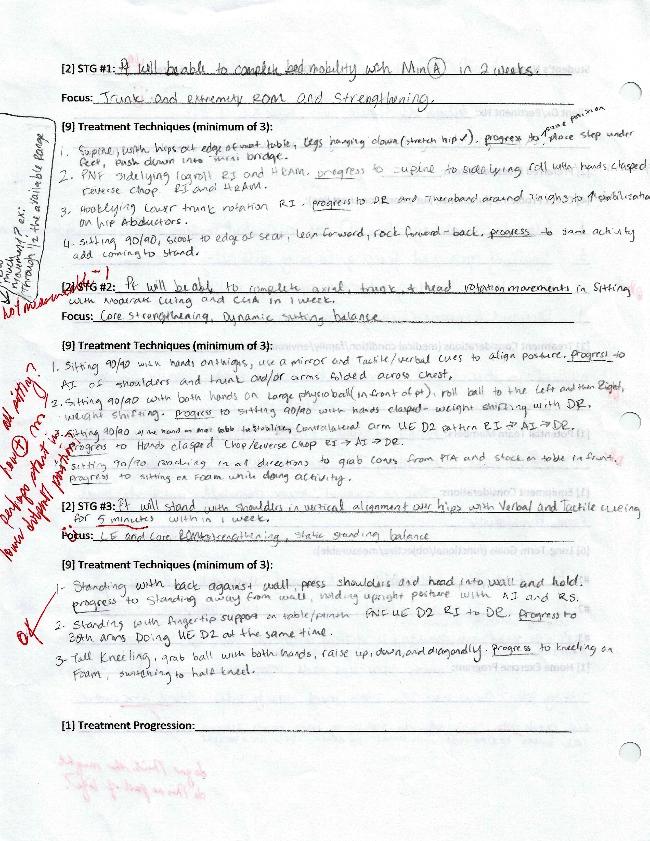
We also did some assignments which required us to come up with treatment techniques for a patient with a specific neurological disorder. I have attached the case study I did for a patient with Parkinson's Disease below.